We’re still measuring design by what’s visible. But the value happens before any screen exists.

What happens before the screens
There’s a moment in every project that rarely gets documented.
It doesn’t appear in case studies.
It’s not visible in polished mockups.
No one shares it on Dribbble.
And yet, it’s where most of the design actually happens.
It’s the moment before anything takes shape.
Before opening Figma.
Before defining components.
Before deciding what the interface will look like.
It starts earlier.
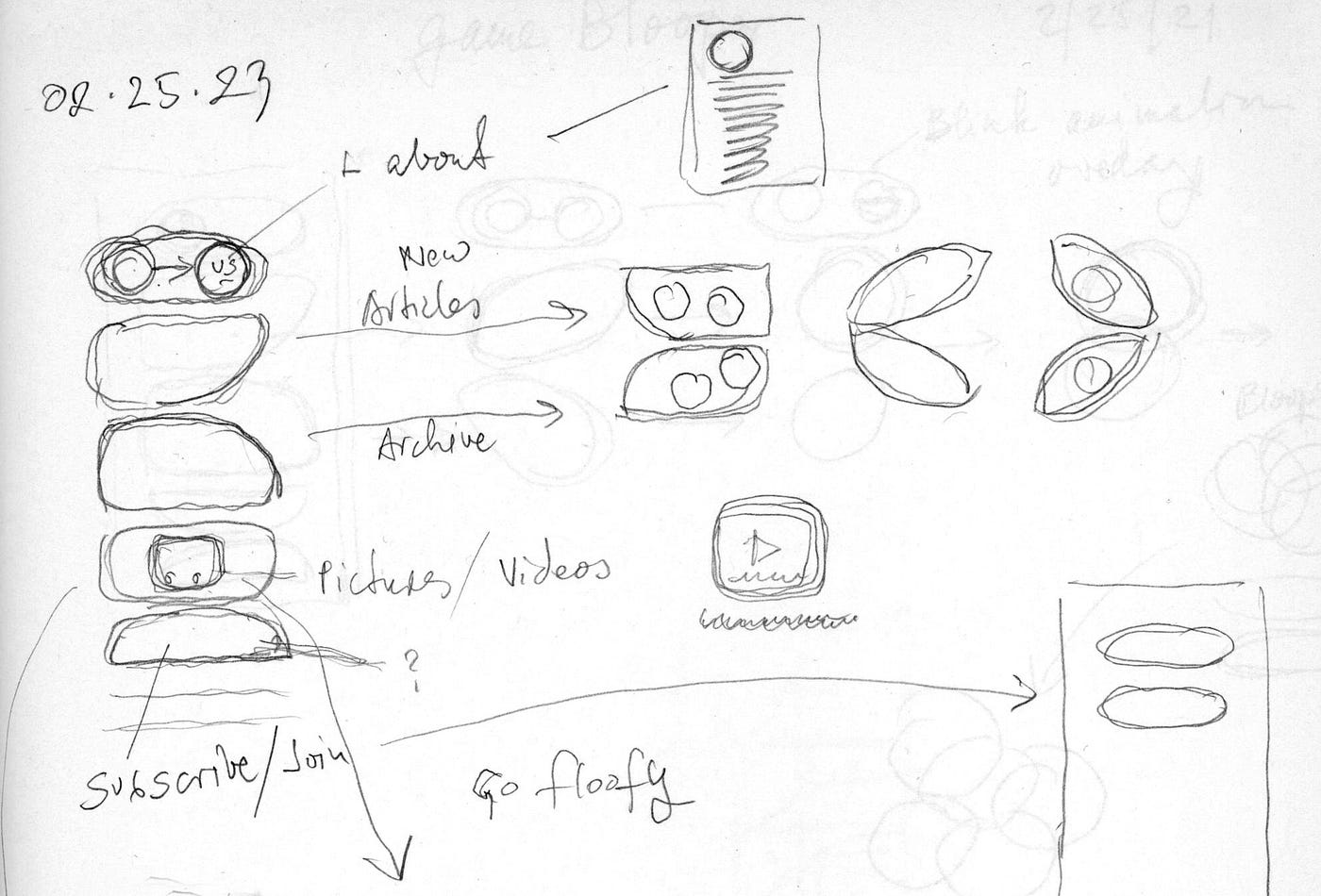
At first, everything is slightly unclear.
The problem sounds defined, but it isn’t.
The requirements exist, but they don’t quite align.
There’s a sense of direction, but no real structure.
This is where design begins.
Not with solutions, but with tension.
You start asking questions.
Not the obvious ones, but the uncomfortable ones.
Why are we building this?
What happens if we don’t?
Who is this really for?
What are we trying to optimize?
The answers are rarely clean.
Sometimes they contradict each other.
Sometimes they expose that the problem is different from what was initially described.
And slowly, almost invisibly, the work starts to take shape.
You move things that no one sees.
You remove steps from a flow that didn’t make sense.
You connect decisions that were previously isolated.
You reduce scope without announcing it.
You let go of ideas that were interesting, but unnecessary.
Nothing visual changes yet.
But everything is already different.
By the time the screens arrive, something important has already happened.
The complexity has been negotiated.
The priorities have been defined.
The system has found a kind of internal logic.
The interface is no longer a question.
It’s a consequence.
This is the part of design that is hardest to explain.
Because it leaves no obvious trace.
There is no single artifact that represents it.
No deliverable that captures the decisions behind it.
No visual that fully reflects the trade-offs that shaped it.
And yet, this is where the quality of the product is determined.
We often talk about design as if it were something we produce.
But in practice, it’s something we resolve.
A continuous process of reducing ambiguity.
Of making things simpler than they initially appear.
Of deciding what deserves to exist — and what doesn’t.
Maybe that’s why the question “Do you already have the screens?” feels slightly off.
Not because it’s wrong.
But because it comes too late.
By the time the screens exist,
the most important part of the design is already behind them.
And if that part is not done well,
no interface — no matter how refined — will be able to compensate for it.
date published
Mar 30, 2025
reading time
3-4 min


